 To be the most satisfactory energy and environment company in the world


Focus on global challenges and pressures, provide competitive energy and environmental solutions and services, and continuously create maximum value for customers.
Technical Characteristics

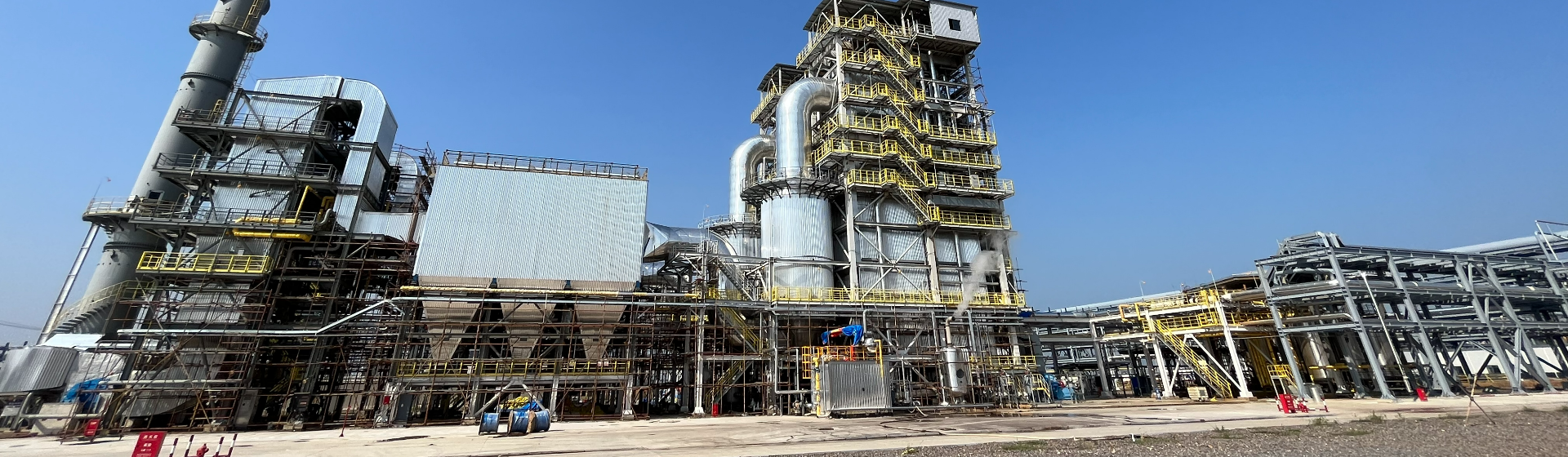
Parallel lines: Each line is rated at 8 t/h and 90 MW. Redundant capacity allows one line to treat all continuous and intermittent gas while the other is under maintenance.
High-calorific-value feed: The theoretical waste-liquid combustion temperature can reach 1,575°C. Membrane water walls with a protective refractory zone withstand high temperature, resist coking and accommodate composition changes.
Low-NOx combustion: Air staging and separated overfire air (SOFA) suppress NOx in the oxygen-deficient primary zone while ensuring burnout. SCR further reduces NOx to below 50 mg/m³.
Dioxin control: Quenching to 200°C within 1 second and activated-carbon injection inhibit dioxin re-formation.
Automation and interlocks: The DCS regulates combustion temperature, negative pressure, feedwater and quench-water flow. Critical interlocks use two-out-of-three redundancy to meet the specified safety-integrity requirements.
Co-treatment: Continuous liquids and gases, C1 fraction and intermittent gases containing hydrocarbons, hydrogen, CO and methane are handled together. Pilot flames stabilize combustion at low load.
Solution

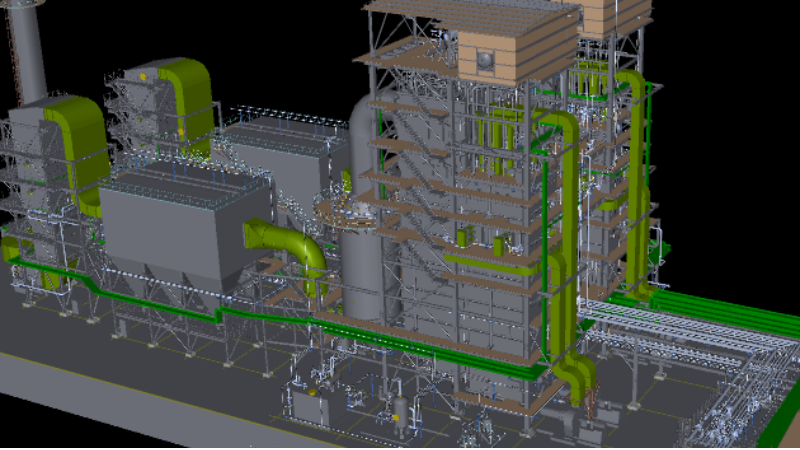
Centralized incineration: Waste liquids, gases and C1 fraction from the process sections, POE unit, laboratory and tank farm are treated together.
Staged firing: Five waste-liquid burners, one waste-gas burner and one C1-fraction burner are installed at the furnace top, with corner overfire air. Steam-atomizing lances produce droplets ≤40 μm for complete combustion without water-wall impingement.
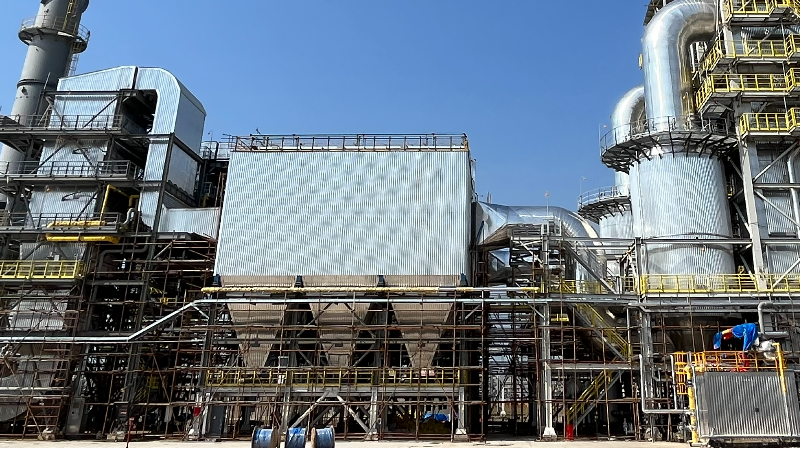
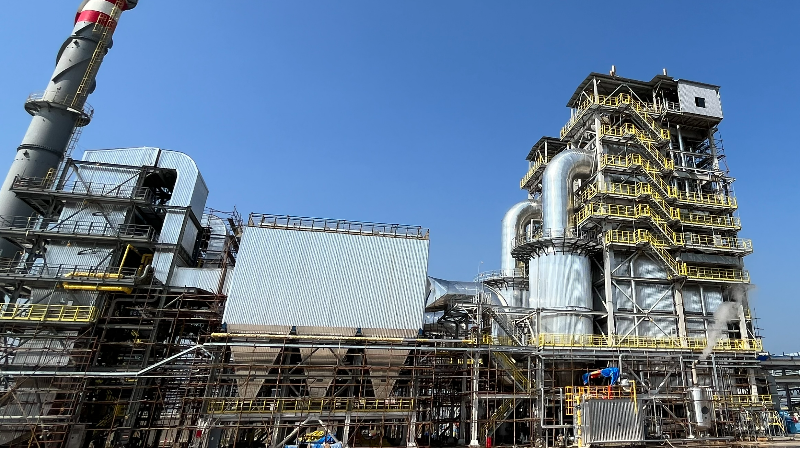
Heat recovery: Membrane-wall waste-heat boilers produce approximately 74 t/h per line of superheated steam at 4.0 MPa and 410°C for the plant network.
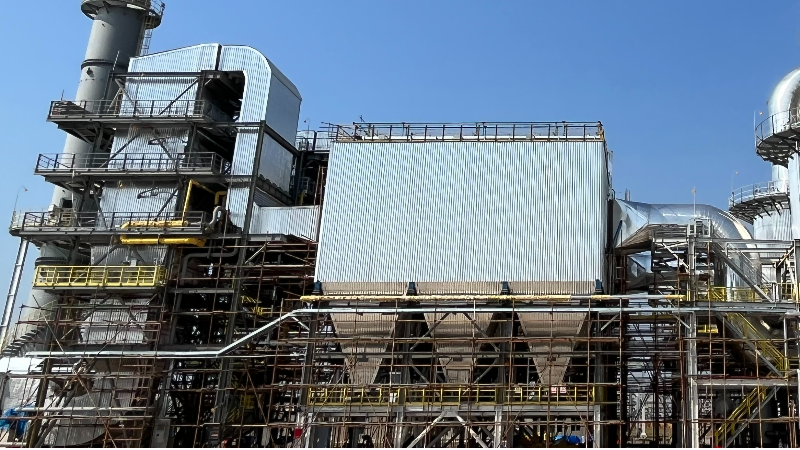
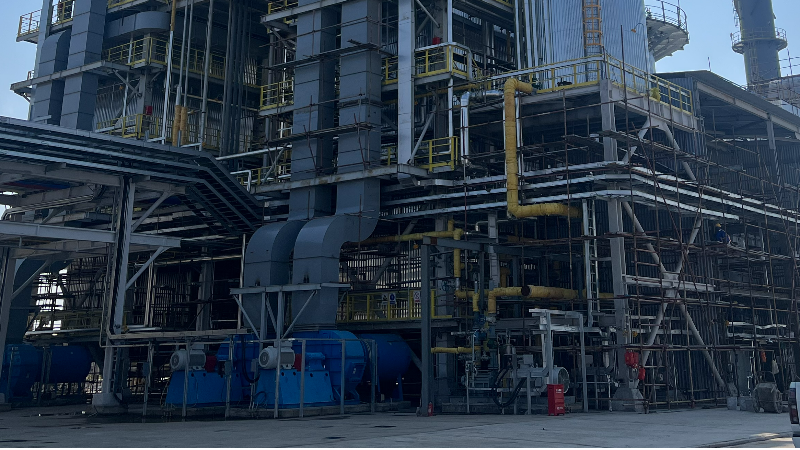
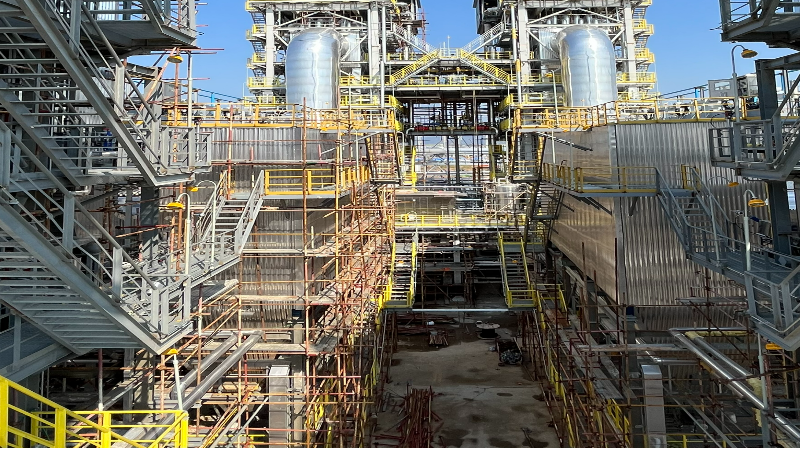
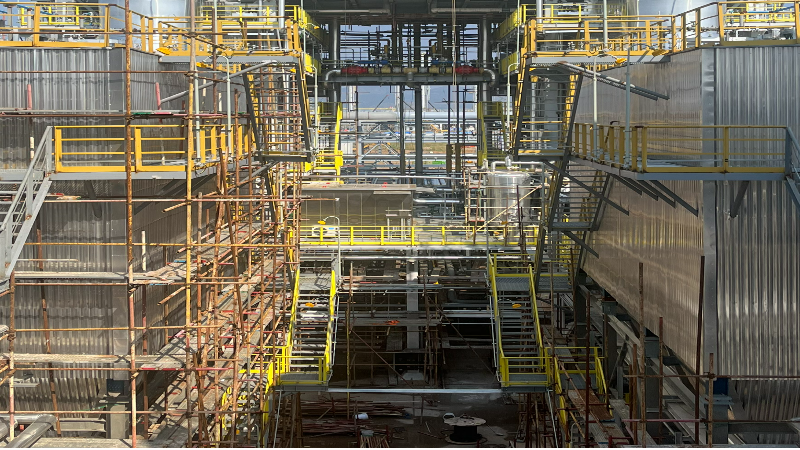
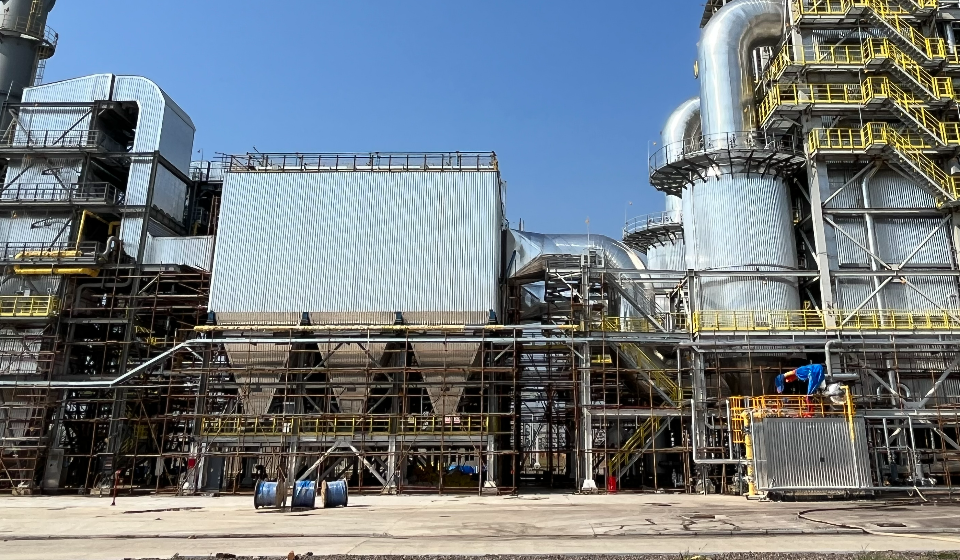
Purification train: Incinerator → waste-heat boiler → quench tower → activated carbon/dry acid removal → bag filter → SCR → low-low-temperature economizer → induced-draft fan → stack.
Feed buffering: Acetic-acid, high-temperature, low-temperature and POE waste-liquid tanks, plus underground tanks, accommodate intermittent discharge and maintenance conditions.
Corrosion and insulation: The quench tower is lined with 2205 stainless steel. Insulated external furnace surfaces remain ≤50°C. Electric heating on ducts and hoppers prevents condensation during treatment of chlorine- and sulfur-rich wastes.
Get The Effect
Waste reduction and stabilization: Annual waste-liquid treatment is 90,912 tonnes. The source's results section reports waste-gas flow of 19,003.6 Nm³/h and C1 fraction of 4.31 t/h. Residue loss on ignition is <5%; ash is solidified and landfilled safely.
Emission guarantees under GB 18484-2020: particulate matter ≤30 mg/m³, CO ≤100 mg/m³, SO₂ ≤100 mg/m³, NOx ≤150 mg/m³ with capability for enhancement to ≤35 mg/m³, and dioxins ≤0.5 ng-TEQ/m³.
Reliability: Design operation is ≥8,000 hours per year and ≥333 continuous days, equipment life is 20 years and operating range is 60–110%.
Energy recovery: Both lines at full load produce approximately 148 t/h of superheated steam, reducing purchased steam requirements.
Noise and residues: Equipment noise is ≤85 dB(A). Fly ash, spent catalysts and filter bags are managed as hazardous waste to prevent secondary pollution.
Safety: Furnace pressure, combustion temperature, quench-water flow and ammonia injection are automatically controlled. Redundant interlocks protect personnel and equipment during abnormal conditions including deflagration, power loss and water loss.