 To be the most satisfactory energy and environment company in the world


 Release Time:2026-10-28
 Source:
On October 22, 2026, a delegation from SENAI (Serviço Nacional de Aprendizagem Industrial / National Service for Industrial Training) of Brazil visited Pyneo Co.,Ltd. for a site tour and exchange focused on practical cooperation in clean energy and environmental protection technologies. The delegation was received by Professor Junhu Zhou, Chairman of pyneo; Shenbing Ding, Vice President; Xiang Zhang, Dean of the Institute of Clean Energy Technology; and other members of the company's team.
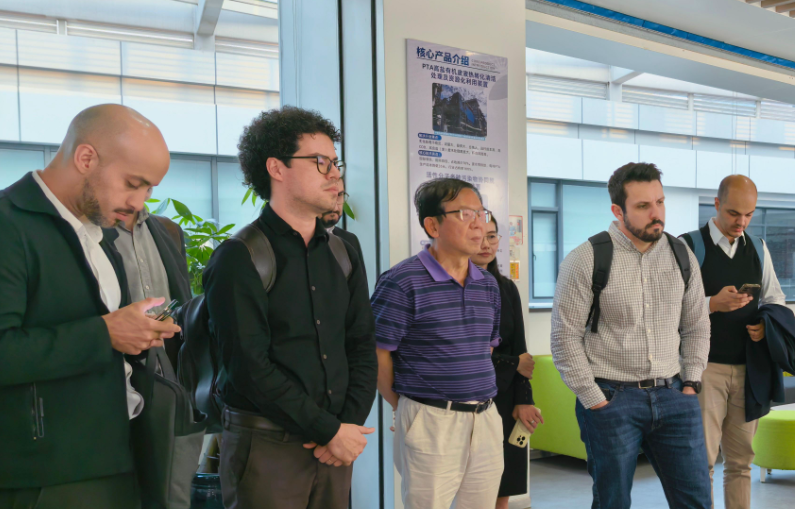
The delegation toured the pyneo exhibition hall.
Accompanied by Zhuona Li, Executive Director of the Zijin Laboratory of Zhejiang University, the delegation began with a tour of the pyneo exhibition hall, where it was briefed in detail on the company's history and core technology achievements. A roundtable meeting followed.
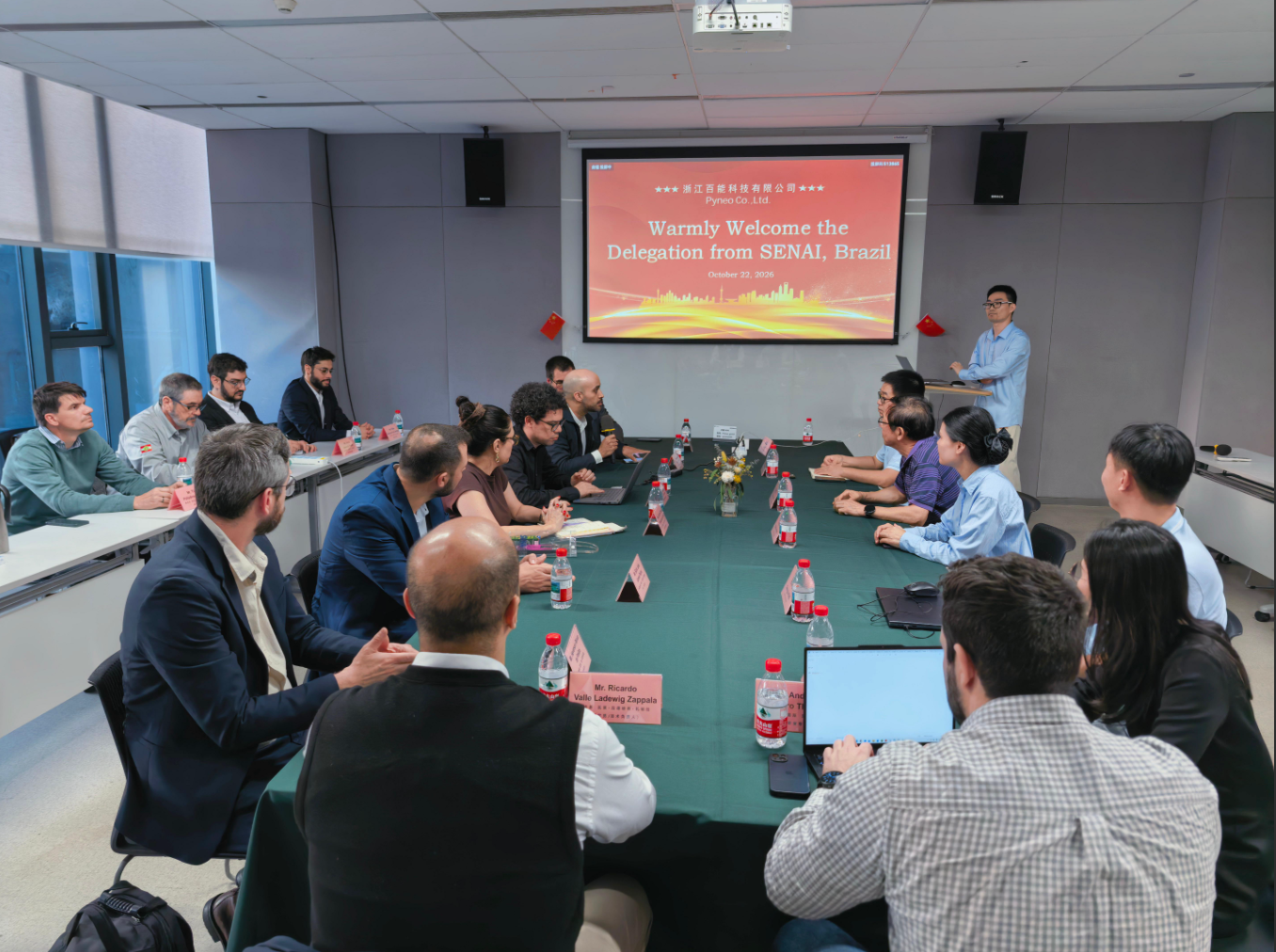
The roundtable meeting.
At the meeting, Professor Zhou welcomed the delegation and outlined pyneo's development and technology portfolio. He noted that as a key platform for commercializing the research achievements of Zhejiang University, the company has worked in depth in the energy and environment fields since its founding in 2005, growing into a National High-Tech Enterprise and a national-level "Little Giant" enterprise. The company has built mature engineering expertise and a solid portfolio of flagship projects across ultra-low flue gas emissions; recovery and reuse of waste solids, liquids and gases; slurry fuel combustion; treatment of high-salinity PTA wastewater; and frontier directions including hydrogen production via the sulfur–iodine cycle, biomass, and microalgae-based carbon sequestration under CCUS. He expressed hope that both sides would build on their respective strengths to identify areas of convergence within Brazil's industrial sectors and steadily deepen practical cooperation.
Giovanni Bressiani Pedroso, Chief Researcher at SENAI, gave the keynote presentation, introducing SENAI's institutional role and its objectives for cooperation. He described SENAI as a major innovation network connecting the Brazilian government, universities, science parks and industry. He pointed out that Brazil faces pressing demand in energy transition, waste treatment, green hydrogen, biogas desulfurization, oily sludge treatment and microalgae-based carbon sequestration, while gaps remain in some of these technologies. He said that through this visit he hopes to introduce advanced Chinese technologies to Brazil, and that SENAI will serve as a gateway linking Brazilian companies and capital, enabling joint R&D with Chinese partners.
During the open discussion, the two sides exchanged views in depth on the topics above and held a full exchange on cooperation models including joint R&D and pilot-scale validation. They agreed to compile a priority list of needs and jointly develop targeted R&D programs.
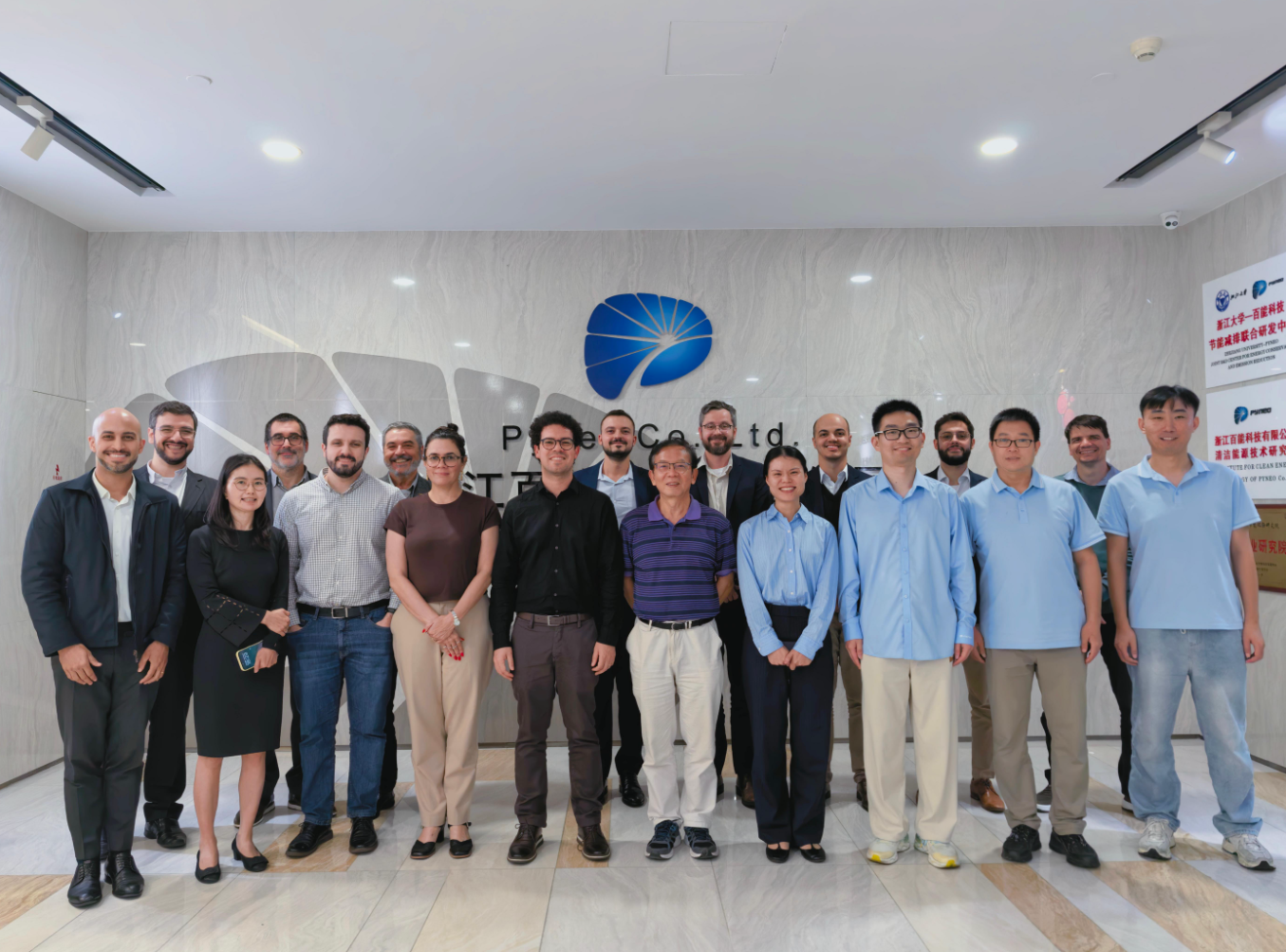
pyneo and SENAI representatives pose for a group photo.
The visit deepened mutual understanding between pyneo and SENAI and established a channel of communication for joint R&D, technology commercialization and pilot demonstration in clean energy and environmental protection technologies. Against the backdrop of high-quality Belt and Road cooperation and deepening BRICS collaboration, the exchange opens new space for green technology and industrial cooperation between China and Brazil, and carries positive significance for taking China's energy-efficiency and environmental protection technologies and equipment to global markets and jointly addressing the challenges of the global energy transition and climate change.